
City Hall
A city hall in two styles: ornate late Gothic on the Hoogpoort, sober Renaissance on the Botermarkt. Running out of money and the wars of religion kept halting the building work. The Pacification of Ghent, a peace between the Low Countries’ provinces, was signed here in 1576.
Visit in 3DOpens Instant Gent in free roam, right by this place. Free, in your browser.
On the map Visiting ↓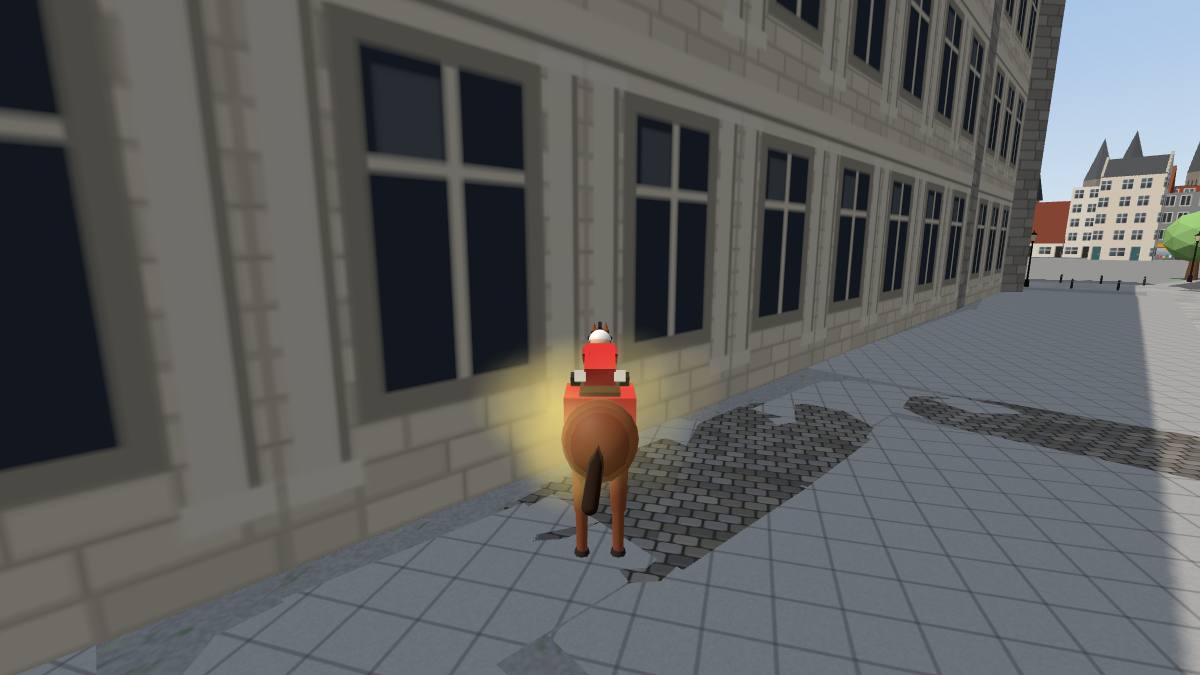
What there is to see
Ghent’s Town Hall is really two buildings in one, as you see at once when you walk around it. On the Hoogpoort stands an exuberant late-Gothic front, full of stone lacework, pinnacles, niches and little balconies: it looks like a stone jewel box. Turn the corner onto the Botermarkt and you face a sober, stately Renaissance front with columns on three storeys, inspired by classical antiquity. The two styles don’t clash; together they tell the story of a city that spent a century building its town hall.
Inside are rooms from different centuries. The Pacification Hall, where the Pacification of Ghent was signed in 1576, has a floor with a maze pattern. The council meets and receptions are held in the Throne Room and the Arsenal Hall, and in the old Collation Hall and the Gothic chapel you see how the city’s rulers once presented themselves. The Town Hall is also where people in Ghent get married: every week couples step out here under the eyes of tourists.
The Town Hall is still the heart of Ghent’s government. The mayor and aldermen work here, and from the balcony on the Botermarkt champions and revellers are cheered.
History
In the Middle Ages the aldermen’s houses stood here, the buildings of the two benches of aldermen who ran the city. By the early 16th century Ghent was so rich and proud that it wanted a town hall to outshine every other in the Low Countries. In 1518 the master builders Rombout Keldermans and Domien de Waghemakere, who also worked in Antwerp and Mechelen, began the late-Gothic wing on the Hoogpoort.
Building soon stalled. In 1539 Ghent rose up against Charles V, lost its privileges and much of its money, and work stopped. Only in the late 16th and early 17th centuries did it go on, now in the new Renaissance style, with the front on the Botermarkt. The wars of religion and lack of money meant the Gothic wing was never finished to the original plan; part of it was only completed in the 19th century.
On 8 November 1576 the Pacification of Ghent was signed in the Town Hall. At a time of war between the Spanish king and the rebellious Netherlands, the provinces agreed to drive out the Spanish troops together and to tolerate each other despite their different faiths. It was a short-lived peace, but an important moment in the history of the Low Countries.
Visiting
The Town Hall is on the corner of the Hoogpoort and the Botermarkt, between the Belfry and the Vrijdagmarkt. You can’t just walk in: it is a working town hall. You see the inside on a guided tour, held at set times and often booked through Visit Gent. The outside you can of course look at any time, and it is well worth it.
Do walk all the way round the building to see both fronts, and on a Saturday see whether there is a wedding going on.
Opening hours, prices and tickets change now and then. The latest and fullest practical information is at Visit Gent, the city's tourist office: have a look there before you go.
View on Visit GentSights nearby
- Mammelokker 78 m
- Belfry 103 m
- Graffiti Street 115 m
- St Nicholas’ Church 168 m
Food and drink nearby
- Den Turk 45 m
- Amadeus 83 m
- Mosquito Coast 149 m
- Du Progrès 200 m
- Poule & Poulette 201 m
- De Dulle Griet 223 m